
Beeple’s Robot Dogs Stun Visitors at Art Basel Miami Beach

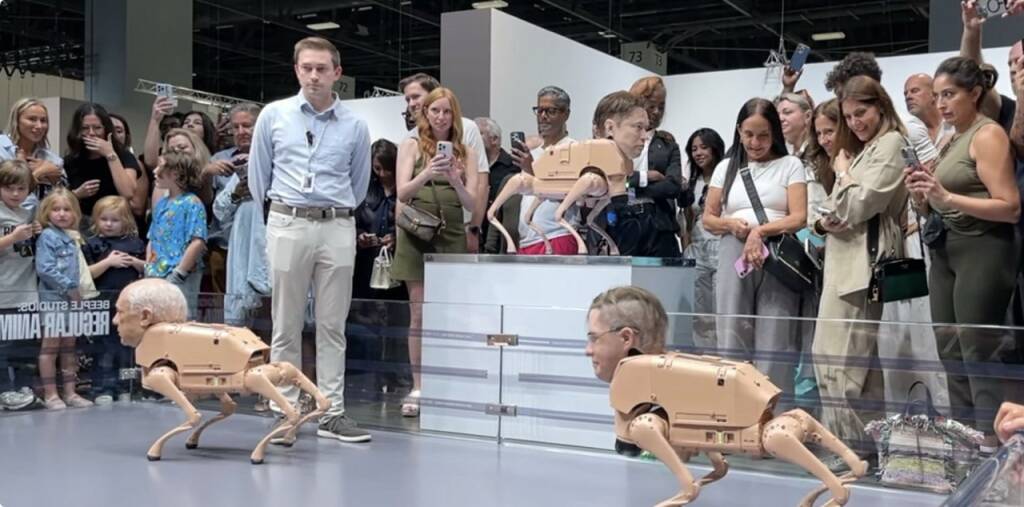
A group of beige robotic dogs moves slowly inside a transparent enclosure at Art Basel Miami Beach. Each four legged machine carries a hyper realistic silicone head modeled on a familiar face. Elon Musk’s features scan the crowd, Andy Warhol’s likeness stares ahead, and the faces of Jeff Bezos, Mark Zuckerberg and Pablo Picasso appear on other robots. The artist Beeple has also given two of the robots his own face.
At irregular moments, each robot leans back slightly while a screen on its back displays the phrase “poop mode”. A printed artwork then drops from the rear. Spectators often respond with laughter, unease or a mix of both as they watch the images fall to the floor.
This installation, titled Regular Animals and completed in 2025, is the latest large scale work by the digital artist Beeple, whose legal name is Mike Winkelmann. It is being shown in Zero 10, the fair’s new section devoted to digital and technology based art. Within hours of the VIP opening, Regular Animals had become one of the most discussed and photographed attractions of Miami Art Week.
Technology, power and filtered vision
Each robot is equipped with cameras that continually record the surrounding scene. The captured images are processed and transformed into prints that echo the style associated with the figure whose head the robot displays. A Warhol appd robot produces images reminiscent of his bold, graphic pop art. A Picasso appd robot generates fractured, Cubist views. Robots modeled on technology leaders produce images with a sleek, futuristic digital quality.
Winkelmann says the robots are “constantly taking pictures and reinterpreting the world through these characters”. Throughout the day he collects the prints as they land on the floor and hands them to visitors gathered around the pen.
The work offers a pointed commentary. Winkelmann has argued in interviews that a small group of powerful technology companies strongly shapes how billions of people perceive the world. Algorithms determine which images and stories reach users and which are hidden. The prints that drop from the robots function as a metaphor for this filtered, algorithm driven view of reality, produced and released without visible human intervention.
Prices, editions and a sold out installation
each robot in Regular Animals is priced at 100,000 dollars, issued in an edition of two with one artist’s proof. An exception is the robot bearing the face of Jeff Bezos, which is not for sale. All of the available works were sold during the VIP preview on Wednesday, confirming Beeple’s continued market appeal in the realm of digital and technology based art.
The printed images are not only physical souvenirs. Each is also minted as a non fungible token, linking the analog output of the machines to a blockchain record. This dual status reflects Beeple’s ongoing attempt to connect physical presence, digital files and crypto based ownership.
From record NFT sale to robotic sculptures
Beeple first became widely known beyond the digital art world in 2021, when his collage Everydays The First 5000 Days sold at Christie’s for 69.3 million dollars. The result made him one of the most expensive living artists and triggered a wave of speculation and attention around NFT art.
The NFT market later contracted, which Winkelmann has described as an inevitable correction after a period of excess and a flood of low quality work. Even so, digital art as a broader field has regained momentum. Art Basel’s 2025 report points to renewed institutional and collector interest in technologically mediated practices. The creation of Zero 10 can be seen as the fair’s response to this shift.
Beeple has expanded his studio in Charleston, South Carolina, turning it into a large facility for experimental digital projects, immersive installations and physical engineering. His works have been presented at venues such as The Shed in New York and the Los Angeles County Museum of Art. He continues his long running practice of producing a new digital image every day, often mixing political satire, cultural commentary and internet visual culture.
Reactions from fascination to unease
On the first day of the fair, crowds formed around the glass enclosure that houses the robots. Many visitors paused when they recognized the faces of Musk, Bezos, Zuckerberg, Picasso and Warhol on the moving bodies. Responses ranged from delight and curiosity to discomfort and criticism. Some described the installation as clever and darkly humorous. Others called it unsettling or even grotesque.
At one unscripted moment, two real dogs that were present at the fair began to bark at the robot animals. Winkelmann allowed them to enter the enclosure briefly, producing a short and striking encounter between living dogs and their uncanny robotic counterparts.
By the end of the first hour of the VIP preview, collectors had purchased every available robot, underscoring the demand for Beeple’s work even as debates about NFTs and artificial intelligence continue.
A programmed lifespan and the idea of living sculptures
The robots are not designed to function fully forever. Their system for capturing images, applying artificial intelligence to process them and recording outputs on the blockchain has a programmed lifespan of three years. After that period, the machines will still be able to walk and move their heads, but they will stop generating new images or adding data to the blockchain.
Winkelmann describes this time limit as an intentional part of the piece. It reflects the rapid obsolescence of contemporary technology, in which devices become outdated and lose core functions long before their physical structure fails. He suggests that more artists will experiment with works that behave less like static objects and more like active entities with their own cycles of activity and decline.
As robotics advances, he argues, people will increasingly project emotion, personality and even moral character onto machines that only simulate life.
Artificial intelligence, NFTs and the future of seeing
Regular Animals appears at a moment when concerns about artificial intelligence generated images, misinformation and digital manipulation are high. By placing cameras, algorithms and blockchain recording inside moving sculptures that resemble both pets and billionaires, the installation turns abstract debates into a tangible experience.
The prints that fall from the machines show a processed version of whatever the robots see, filtered through artificial intelligence routines and styled according to famous artists and technology leaders. For some viewers, this reads as sharp satire of celebrity, surveillance and tech power. For others, it feels like a warning about a future in which algorithmic systems quietly frame almost everything people see.
Whatever the interpretation, Beeple’s robot dogs have ensured that Zero 10 is one of the most visited and debated sections of Art Basel Miami Beach. During this edition of the fair, many of the faces that attract the most attention are not those of dealers or collectors, but the silicone visages mounted on the moving bodies of Regular Animals.
سگهای رباتیک بیپل بازدیدکنندگان آرت بازل میامی بیچ را شگفتزده کردند
گروهی از سگهای رباتیک بژرنگ درون محوطهای شفاف در آرت بازل میامی بیچ بهآرامی حرکت میکنند. هر ربات چهارپا یک سر سیلیکونی فوقواقعگرا دارد که بر اساس چهرهای آشنا ساخته شده است. چهرهٔ ایلان ماسک جمعیت را اسکن میکند، تصویر اندی وارهول روبهرو را مینگرد، و چهرههای جف بیزوس، مارک زاکربرگ و پابلو پیکاسو نیز بر دیگر رباتها دیده میشود. همچنین بیپل هنرمند خالق اثر، چهرهٔ خود را روی دو ربات قرار داده است.
در لحظاتی به صورت نامنظم، هر ربات کمی به عقب متمایل میشود و صفحهای روی پشت آن عبارت «حالت دفع» را نمایش میدهد. سپس یک اثر چاپی از قسمت پشتی دستگاه بیرون میافتد. تماشاگران هنگام دیدن این صحنه معمولاً با خنده، تعجب یا ترکیبی از هر دو واکنش نشان میدهند.
این چیدمان که «حیوانات عادی» نام دارد و در سال ۲۰۲۵ تکمیل شده، جدیدترین اثر بزرگمقیاس بیپل، هنرمند دیجیتال با نام رسمی مایک وینکلمن است. این اثر در بخش جدید “زیرو ۱۰” که به هنر دیجیتال و مبتنی بر فناوری اختصاص دارد، نمایش داده میشود. تنها چند ساعت پس از افتتاح پیشنمایش ویژه، «حیوانات عادی» به یکی از پرگفتوگوترین و پربازدیدترین آثار هفتهٔ هنر میامی تبدیل شد.
فناوری، قدرت و دیدِ فیلترشده
هر ربات به دوربینهایی مجهز است که پیوسته محیط اطراف را ثبت میکنند. تصاویر ضبطشده پردازش و به پرینتهایی تبدیل میشوند که سبک هنری چهرهٔ نصبشده بر ربات را بازتاب میدهند. رباتی با تم وارهول تصاویری با حالوهوای پاپ آرت و گرافیک جسور او تولید میکند. رباتی با تم پیکاسو برداشتهایی شکسته و کوبیستی ارائه میدهد. رباتهایی که بر اساس چهرهٔ رهبران فناوری طراحی شدهاند، تصاویری با کیفیت دیجیتال و آیندهنگر ارائه میکنند.
وینکلمن میگوید این رباتها «به طور مداوم در حال عکسبرداری و بازتفسیر جهان از نگاه این شخصیتها هستند». او در طول روز پرینتها را از روی زمین جمع میکند و به بازدیدکنندگان اطراف محوطه میدهد.
این اثر لایهای انتقادی نیز دارد. وینکلمن در گفتوگوهای خود تأکید کرده است که شمار اندکی از شرکتهای قدرتمند فناوری، به شکلی جدی ادراک میلیاردها نفر از جهان را شکل میدهند. الگوریتمها تعیین میکنند کدام تصاویر و روایتها به کاربران برسد و کدام پنهان بماند. پرینتهایی که از رباتها بیرون میافتد استعارهای از همین دیدگاه فیلترشده و الگوریتممحور از واقعیت است که بدون دخالت آشکار انسان تولید میشود.
قیمت، نسخهها و فروش کامل اثر
قیمت هر ربات در «حیوانات عادی» ۱۰۰ هزار دلار است و هرکدام در قالب نسخهای شامل دو نمونه و یک نمونهٔ مخصوص هنرمند عرضه میشود. تنها استثنا رباتی با چهرهٔ جف بیزوس است که فروشی نیست. تمامی رباتهای قابلخرید در جریان پیشنمایش ویژهٔ روز چهارشنبه فروش رفتند و این موضوع نشاندهندهٔ محبوبیت مداوم بیپل در حوزهٔ هنر دیجیتال و آثار مبتنی بر فناوری است.
تصاویر چاپشده تنها یادگاریهای فیزیکی نیستند؛ هر کدام همچنین بهعنوان یک توکن غیرقابلتعویض (NFT) ثبت میشوند و خروجی آنالوگ رباتها را به رکوردی در بلاکچین مرتبط میکنند. این وضعیت دوگانه بازتابی از تلاش بیپل برای ایجاد پیوند میان حضور فیزیکی، فایلهای دیجیتال و مالکیت مبتنی بر رمزارز است.
از رکورد تاریخیNFT تا مجسمههای رباتیک
بیپل در سال ۲۰۲۱ با فروش کلاژ «روزمرهها؛ پنج هزار روز نخست» به قیمت ۶۹.۳ میلیون دلار در کریستیز به شهرت جهانی رسید. این فروش او را در میان گرانترین هنرمندان زنده قرار داد و موجی از توجه و گمانهزنی دربارهٔ هنر NFT ایجاد کرد.
بازار NFT بعدها کوچک شد؛ مسئلهای که وینکلمن آن را اصلاحی طبیعی پس از یک دورهٔ افراط و هجوم آثار کمکیفیت توصیف کرده است. با این حال، حوزهٔ گستردهتر هنر دیجیتال دوباره رونق گرفته است. گزارش سال ۲۰۲۵ آرت بازل نشان میدهد علاقهٔ مجموعهداران و نهادها به آثار مبتنی بر فناوری افزایش یافته و ایجاد بخش «زیرو ۱۰» نیز پاسخی به همین روند است.
وینکلمن استودیوی خود را در چارلستون کارولینای جنوبی گسترش داده و آن را به مرکز بزرگی برای پروژههای تجربی دیجیتال، چیدمانهای غوطهورکننده و مهندسی فیزیکی تبدیل کرده است. آثار او در فضاهایی مانند «شِد» نیویورک و «لاكما» لسآنجلس به نمایش درآمدهاند. او همچنان به تولید روزانهٔ یک تصویر دیجیتال ادامه میدهد که غالباً ترکیبی از طنز سیاسی، نقد فرهنگی و زیباییشناسی اینترنتی است.
واکنشها؛ از شیفتگی تا ناآرامی
در روز نخست نمایشگاه، جمعیت زیادی اطراف محوطهٔ شیشهای محل حرکت رباتها گرد آمدند. بسیاری وقتی چهرههای ماسک، بیزوس، زاکربرگ، پیکاسو و وارهول را روی بدنهای متحرک دیدند، مکث کردند. واکنشها از شوق و کنجکاوی تا ناراحتی و انتقاد متفاوت بود. برخی این چیدمان را هوشمندانه و طنزآمیز توصیف کردند و برخی آن را نگرانکننده یا حتی ناخوشایند دانستند.
در لحظهای پیشبینینشده، دو سگ واقعی که در محل حضور داشتند شروع به پارس کردن به رباتها کردند. وینکلمن اجازه داد آنها برای مدت کوتاهی وارد محوطه شوند و صحنهای کوتاه اما چشمگیر از مواجههٔ سگهای زنده با همتایان رباتیکشان شکل گرفت.
در پایان نخستین ساعت پیشنمایش ویژه، تمام رباتهای موجود خریداری شدند؛ موضوعی که نشاندهندهٔ تقاضای بالا برای آثار بیپل است، حتی در شرایطی که بحثهای مربوط به NFT و هوش مصنوعی ادامه دارد.
طول عمر برنامهریزیشده و ایدهٔ مجسمههای زنده
رباتها برای عملکرد کامل دائمی طراحی نشدهاند. سامانهٔ ثبت تصویر، پردازش هوش مصنوعی و ذخیرهسازی داده روی بلاکچین تنها سه سال فعال خواهد بود. پس از آن، رباتها همچنان قادر به راهرفتن و حرکت سر خواهند بود، اما دیگر تصویر جدید تولید نمیکنند و دادهای به بلاکچین اضافه نمیشود.
وینکلمن این محدودیت زمانی را بخشی آگاهانه از اثر میداند. این موضوع بازتابی از سرعت فرسودگی فناوریهای معاصر است؛ زمانی که دستگاهها مدتها پیش از خراب شدن فیزیکی، کارکردهای اصلی خود را از دست میدهند. او معتقد است هنرمندان بیشتری به خلق آثاری روی خواهند آورد که بهجای اشیای ثابت، مانند موجوداتی فعال رفتار میکنند و چرخهٔ فعالیت و افول دارند.
به گفتهٔ او، با پیشرفت رباتیک، انسانها بیش از پیش برای ماشینهایی که تنها تقلیدکنندهٔ زندگی هستند، احساس، شخصیت و حتی اعتبار اخلاقی قائل خواهند شد.
هوش مصنوعی، NFT و آیندهٔ دیدن
“حیوانات عادی” در زمانی عرضه شده است که نگرانیها دربارهٔ تصاویر تولیدشده با هوش مصنوعی، اطلاعات نادرست و دستکاری دیجیتالی در اوج قرار دارد. این چیدمان با قرار دادن دوربینها، الگوریتمها و ثبت بلاکچینی درون مجسمههایی متحرک که هم شبیه حیوانات خانگی هستند و هم شبیه چهرههای میلیاردر، بحثهای انتزاعی را به تجربهای ملموس تبدیل میکند.
تصاویری که از رباتها بیرون میافتد نسخهٔ پردازششدهای از آن چیزی است که آنها میبینند؛ نسخهای که توسط هوش مصنوعی فیلتر شده و سبک آن بر اساس هنرمندان مشهور و رهبران فناوری تنظیم شده است. برای برخی بینندگان، این موضوع طنزی تیز دربارهٔ شهرت، نظارت و قدرت فناوری است. برای برخی دیگر، هشداری دربارهٔ آیندهای است که در آن سیستمهای الگوریتمی تقریباً همه چیز را برای انسان قاببندی میکنند.
فارغ از تفسیرها، سگهای رباتیک بیپل باعث شدهاند بخش «زیرو ۱۰» به یکی از پربازدیدترین و بحثبرانگیزترین بخشهای آرت بازل میامی بیچ تبدیل شود. در این دوره از نمایشگاه، شاید چشمگیرترین چهرهها نه متعلق به دلالان یا مجموعهداران، بلکه همان سرهای سیلیکونی نصبشده بر بدنهای متحرک «حیوانات عادی» باشند.
Recommend0 recommendationsPublished in News

Responses